HR · compliance · 3 min read
Hours, pay and compliance
Amazon’s hours rules are not a calendar week and are not about your station. They are a rolling seven-day window, they follow the person, and they add up across every yard that person worked at. Almost every surprise in this area comes from one of those three.
The limits, and the window they are measured in
- 12 hours
- In a day.
- 60 hours
- In any rolling seven days — not Sunday to Saturday. Today plus the six behind it.
- 10 hours
- Of rest between shifts.
- 6 days
- Consecutive, maximum.
The thresholds are a list you can edit if yours differ. The rolling window is the part worth repeating to a new dispatcher: somebody can be inside every weekly total you would naturally look at and still breach, because the seven days that matter straddle the weekend.
Paid against clocked
HR & Compliance › Hours
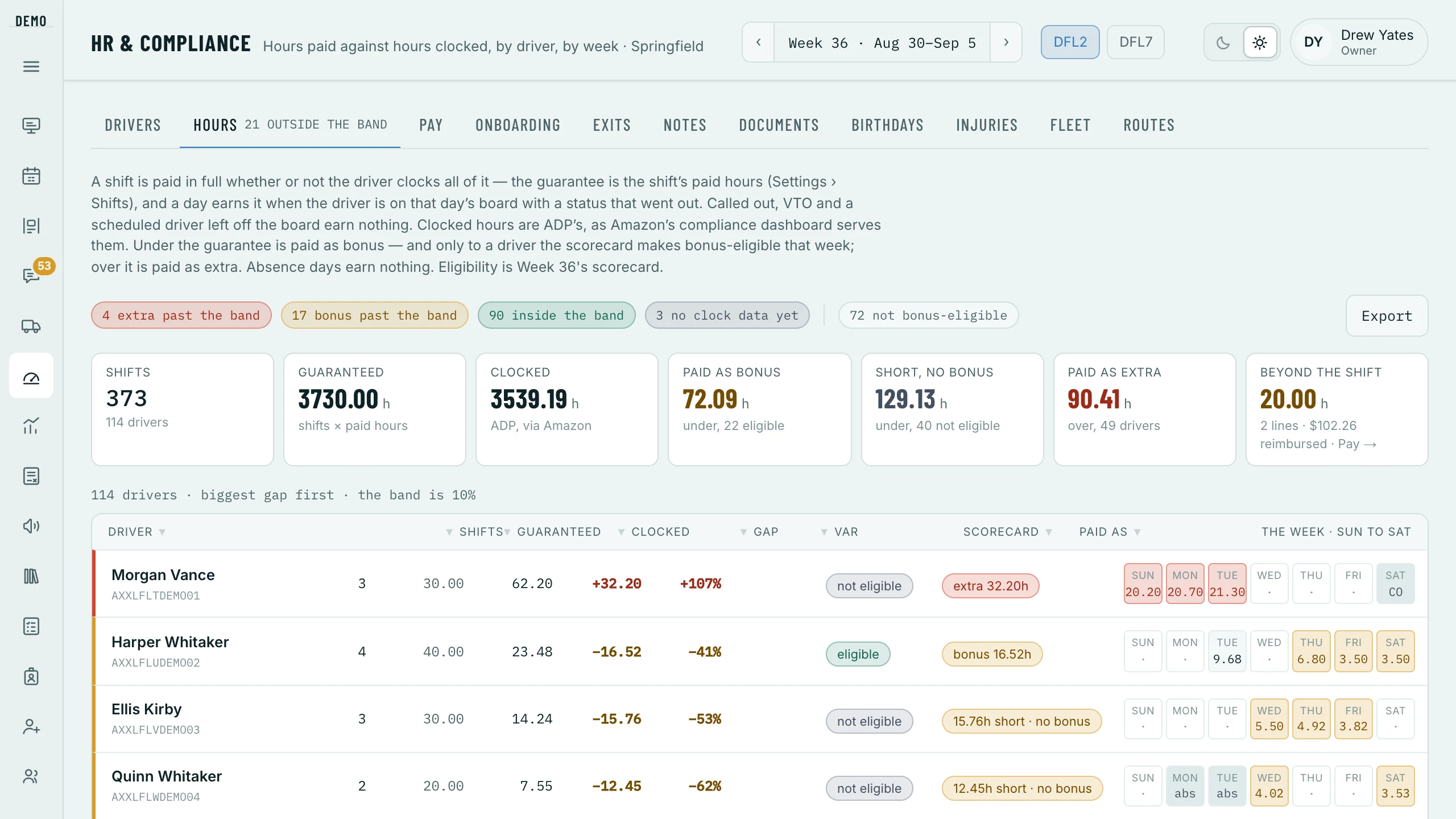
Two different numbers and you need both. Clocked is real punch times and breaks, pulled from Amazon’s own compliance dashboard by the sync — not from your payroll provider and not an estimate. Paid is what the board says the day was worth, including your own rules for a cancelled route or a guaranteed day. The screen puts them side by side, per driver, per week, so a gap is a question you can ask on Monday rather than discover on a payslip.
The rest of the tab
- The pay week
- The week as your payroll needs it, with your absence types priced the way you have set them.
- Exits
- What has to happen when somebody leaves, and what still has not.
- Injuries and the OSHA log
- The incident, the form, and the log itself — kept as you go rather than reconstructed in January.
- The route ledger
- Routes run, packages planned and returns, per day, which is the side of the invoice you want to be able to check.
- Birthdays and milestones
- So an anniversary reaches a screen before somebody has to remember it.
The early-morning check
An hour before anybody’s alarm goes off, the product signs in as three real drivers and reads the five screens they will open — and if any of them is slow or broken it rings the Owner and the Ops Manager rather than waiting to be discovered at check-in. It does not report an all-clear on a check it could not run, because a check that measured nothing is an alarm, not good news.